- Blog
Can AI Design My Product For Me?
- By Nicholas Love
Have you ever had an idea for a product and thought, “I wish I could just press a button and have it all designed for me”? That’s exactly what many people imagine when they hear about artificial intelligence. AI has become the go-to solution for generating images, writing text, and even creating videos from simple prompts. So it’s no surprise that inventors are now asking:
Can AI actually design my product? The short answer is: maybe. But it depends on what stage you’re at and what kind of help you need. Let’s break it down.
Why Do People Want to Use AI for Product Design?
AI feels like an easy button. Today, you can type a few words and instantly get a realistic image, a business plan, or even a voiceover. This makes it very tempting for new inventors who are excited about their ideas but don’t have a background in design or engineering.
For people without experience in CAD, prototyping, or manufacturing, using AI to design a product can sound like a dream come true. It feels faster, cheaper, and easier than hiring a designer or learning to use complicated software.
But product design isn’t just about how something looks. It’s about how it works, how it can be built, how much it will cost, and whether it solves a real problem. That’s where the challenge begins.
What AI Tools Are Available for Product Design?
There are several types of AI tools on the market today that can help with different parts of the product design process. Each one has strengths and limitations depending on your goals and skill level.
Text-to-CAD Generators
Some new AI tools are trying to turn written prompts directly into 3D models. While these tools are still in development, they’re starting to show promise. Platforms like Prome AI and others are working on solutions where you can describe your idea in plain English and get back a basic CAD model.
These are best for concept-level work, not final designs. The models often need significant cleanup before they can be used for prototyping or manufacturing. AI still really struggles to understand and intuit more complex features like living hinges, tolerance interfaces, and more than just simple features. This might become more useful in a few years but here in 2025 it’s just not there yet.
Image Generators (Grok, ChatGPT, Gemini, Midjourney, DALL·E, etc.)
Image-based AI tools can turn your idea into a sketch or concept art. This is a great way to visualize your idea or pitch it to a friend or investor. But it’s important to understand that these images can’t be turned into real-world prototypes directly. These are really helpful to get an idea of how your product might look and can help if you’re working with CAD designers so they understand what you are looking for.
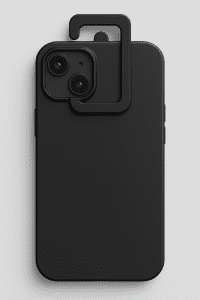
To evaluate a few of the different options here, I pasted this prompt into a few services and you can see how it’s hit or miss:
“I want you to design phone case for an iPhone 14 that has a hook on top that can fold down and sit flush on the back of the case. I want this to be designed for plastic injection molding with a focus for simplicity. Make 3 different renders in different colors (black, grey, and light blue).”


CAD Programs With AI Features
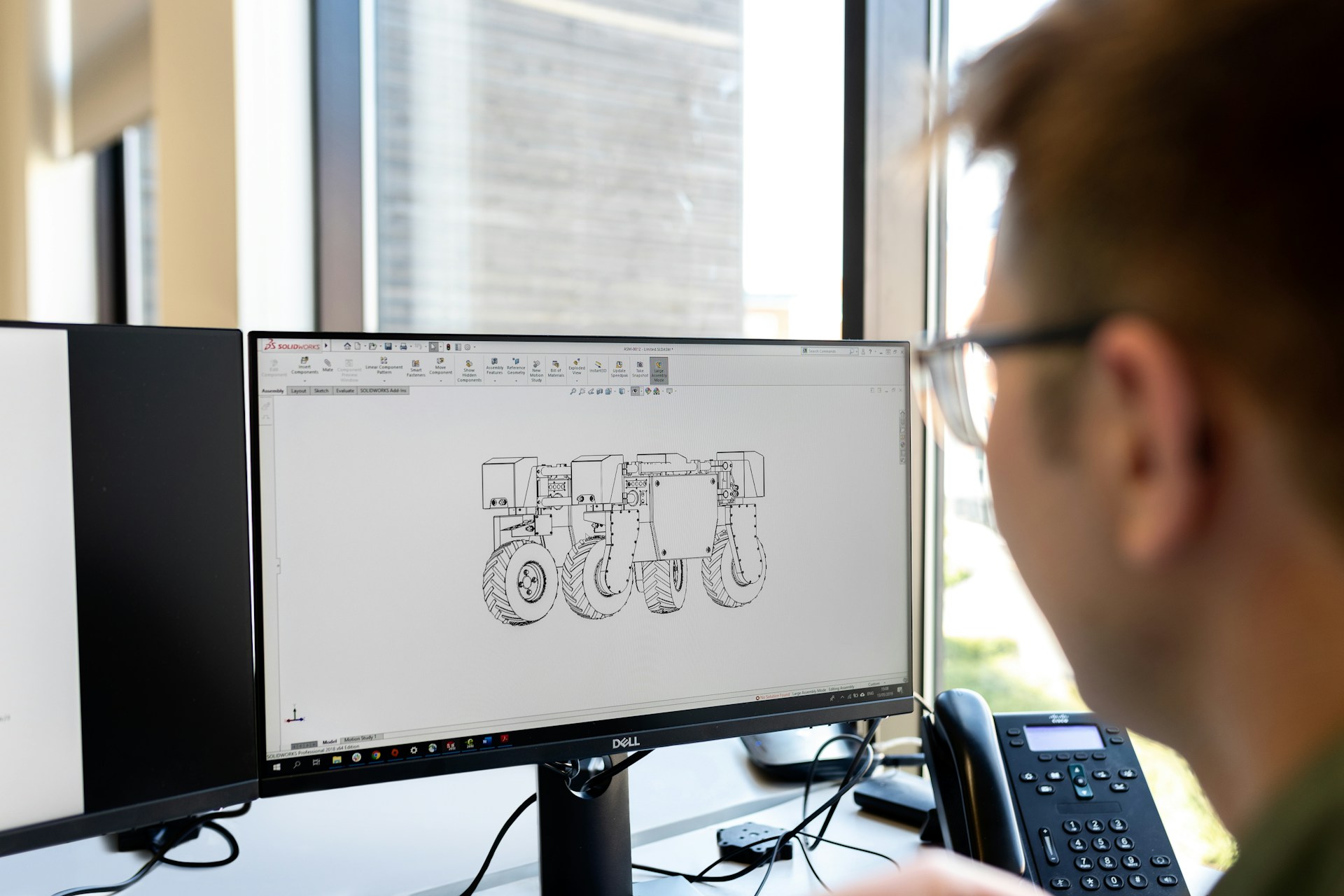
Mainstream CAD platforms like Fusion 360 and SolidWorks are now integrating AI-powered generative design. These tools can take your design goals like strength, weight, or space limits and generate several versions of a part that meet your criteria.
This is incredibly powerful, but it does require some CAD knowledge. You still need to know how to set up constraints and understand engineering requirements. Unless you are ok with spending a few months learning one of these CAD software and have the money for a license, you might want to consider other options.
3D Scanning and AI Cleanup Tools
If you’ve created a physical model by hand, there are tools that let you scan it and turn it into a 3D file. Apps like Polycam and Luma AI can do this with a smartphone. AI is used to clean up the scan and fill in missing data. This is really cool since you can then 3D print or create a solid model quickly but it won’t give you a parametric model (a model that can be modified to change dimensions or edit in a useful way).
Is AI the Best Choice for New Inventors?
The answer depends on your situation.
If you already know your product will work, you have the money to invest, and you’re looking to get to market fast, hiring a full-service design and engineering firm might be the right move. These firms can take your idea and handle everything from CAD to prototyping to production but it comes at a cost, often thousands or tens of thousands of dollars.
If you’re still in the early stages and want to quickly see a few different directions for your product, AI can be a helpful tool. You might generate some ideas, explore different forms, and get inspired without hiring anyone.
But if you’re unsure what steps to take, whether your idea is worth pursuing, or how to move forward without wasting money then AI might not be enough. That’s where we can come in.
How Inventors Innovation Can Help
At Inventors Innovation, we help regular people with product ideas understand what to do next.
We don’t do detailed design work, and we don’t try to sell you on expensive engineering services. What we offer is simple: honest, fast feedback and a clear plan for how to move your idea forward.
It’s designed for everyday people who don’t want to waste time or money going in circles. And it’s a great option if you’re stuck trying to decide whether to use AI, hire someone, or try to do it yourself.
You can learn more or get started by visiting our home page.
Final Thoughts: AI Is a Tool, Not a Shortcut
There’s no question that AI is changing the way we approach creativity and design. It’s faster and more powerful than ever. But when it comes to building real, working products, it still has limitations especially if you’re just getting started.
For some inventors, AI will be a helpful tool. For others, it might feel overwhelming or unclear. Either way, the most important thing is to not get stuck waiting for perfection.
If that sounds like you, be sure to read our other blog post on The Endless Loop of Perfection, a common trap that keeps many great ideas from ever seeing the light of day.
Ready to get out of the idea phase and take action? We’re here to help.
Related Posts
An Idea – The Endless Loop of Perfection
Join our Mailing list for more!
This is a great way to stay up to date with our services and receive updates when we post helpful blog posts about how to take your idea to the next step!